Menu
Currency
Main
Store
Blog

Loading Report

Preparing your ancestry journey

Connecting to ancient matches...

Preparing your report

Skip to main content
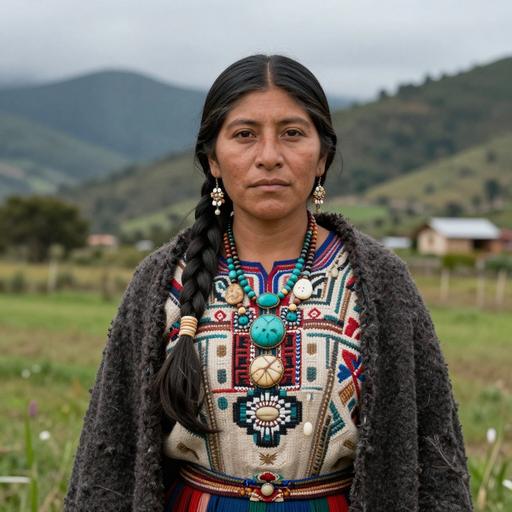
Portrait reconstruction of A woman buried in Mexico in the Post-Classic era
Ancient Individual

A woman buried in Mexico in the Post-Classic era

A woman buried in Mexico during the Purépecha (Tarascan) State

A fragment of the ancient world, preserved across millennia in strands of DNA.

E4_merged
647 CE - 825 CE
Female
Mexico
Scroll to begin
Chapter I

Identity

The biological and cultural markers that define this ancient individual

Sample ID

E4_merged

Date Range

647 CE - 825 CE

Cultural Period

Purépecha (Tarascan) State

Biological Sex

Female

mtDNA Haplogroup

D1i2

Y-DNA Haplogroup

N/A (Female)

Social Role

Farmer (AI estimate, era-typical)

Chapter II

Place

Where this individual was discovered

Country Mexico
Locality La Mina(Michoacán)
Chapter III

Time

When this individual lived in the broader context of human history

E4_merged 647 CE - 825 CE
Chapter IV

Story

The narrative of this ancient life

Region & Environment

Western Mexico includes varied highlands and lake-and-river zones, with climates that supported maize agriculture and other crops. Local water and elevation gradients shaped where settlements formed and how agricultural production could be intensified.

Historical Context

From about 1350 to 1530 CE, the Purépecha (Tarascan) state is commonly described as one of the major regional powers in western Mesoamerica. Its history overlaps the late Post-Classic world in which city-states and regional polities competed and interacted across large areas.

Populations & Lifeways

Purépecha communities lived in organized settlements with household agriculture at the base of subsistence. Production and exchange extended beyond subsistence: communities supported specialists involved in crafts and in managing goods and relationships between towns and strategic areas.

Archaeology & Material Culture

Archaeological signatures include permanent settlement architecture and regionally patterned artifacts, often discussed alongside ceramics, obsidian and stone tools, and evidence of craft production. Fortification or organized settlement layouts are relevant in describing how the Purépecha polity managed territory, though the archaeological record must be read conservatively.

Culture & Society

Social life is best understood through the combination of archaeological patterning and later historical documentation about the Purépecha. Material culture and settlement organization suggest hierarchical political leadership and structured roles for craft production and resource distribution. Interactions with neighboring groups likely included trade and conflict, reflecting the broader Post-Classic environment.

Legacy & Transition

The period ends around 1530 CE, during early European contact and the reorganization of Indigenous polities. Purépecha historical trajectories, cultural practices, and regional memory continued to influence later communities, even as political structures were transformed in the colonial era.

Context

Related Samples

This individual exists within a broader network of ancient samples. No ancient genome stands alone.

Sample ID Culture/Period Date Location Action
11R_merged Mexico Queretaro Medieval 729 CE Ranas (Querétaro, Sierra Gorda), Mexico View
2417J Mexico Queretaro Medieval 1100 CE Toluquilla (Querétaro, Sierra Gorda), Mexico View
2417Q Mexico Queretaro Medieval 671 CE Toluquilla (Querétaro, Sierra Gorda), Mexico View
333B_merged Mexico Queretaro Medieval 1300 CE Toluquilla (Querétaro, Sierra Gorda), Mexico View
E19CdV Mexico Guanajuato Medieval 660 CE Cañada de la Virgen (Guanajuato), Mexico View
E2_merged Purépecha (Tarascan) State 647 CE La Mina(Michoacán), Mexico View
E4CdV Mexico Guanajuato Medieval 670 CE Cañada de la Virgen (Guanajuato), Mexico View
E4_merged Purépecha (Tarascan) State 647 CE La Mina(Michoacán), Mexico View
E7CdV Mexico Guanajuato Medieval 540 CE Cañada de la Virgen (Guanajuato), Mexico View
E8CdV Mexico Guanajuato Medieval 540 CE Cañada de la Virgen (Guanajuato), Mexico View
Sample ID Culture/Period Date Location Action
E2_merged Purépecha (Tarascan) State 647 CE La Mina(Michoacán), Mexico View
E4_merged Purépecha (Tarascan) State 647 CE La Mina(Michoacán), Mexico View
Sources

References

Scientific publications and genetic data that inform this profile.

Scientific Publication

Demographic history and genetic structure in pre-Hispanic Central Mexico

Authors Villa-Islas V, Izarraras-Gomez A, Larena M, Campos EMP, Sandoval-Velasco M et al.
Abstract

Aridoamerica and Mesoamerica are two distinct cultural areas in northern and central Mexico, respectively, that hosted numerous pre-Hispanic civilizations between 2500 BCE and 1521 CE. The division between these regions shifted southward because of severe droughts ~1100 years ago, which allegedly drove a population replacement in central Mexico by Aridoamerican peoples. In this study, we present shotgun genome-wide data from 12 individuals and 27 mitochondrial genomes from eight pre-Hispanic archaeological sites across Mexico, including two at the shifting border of Aridoamerica and Mesoamerica. We find population continuity that spans the climate change episode and a broad preservation of the genetic structure across present-day Mexico for the past 2300 years. Lastly, we identify a contribution to pre-Hispanic populations of northern and central Mexico from two ancient unsampled "ghost" populations.

Use code for 25% off Expires Jul 24